Free and instant — plug in your own numbers.
Most credit cards calculate interest in three steps. They divide your APR by 365 to get a daily periodic rate, multiply it by your average daily balance for the billing cycle, then multiply by the number of days in the cycle. At an illustrative 24.99% APR, that works out to about 0.0685% a day, or roughly $1.64 a day on a $2,400 balance.
If you pay your full statement balance by the due date every month, most cards charge no interest on purchases at all, thanks to the grace period. Interest only starts to matter once you carry a balance, and from then on, when you pay matters almost as much as how much you pay.
The formula
Most issuers divide by 365, but your cardholder agreement states the exact method, including which balances are counted and whether new purchases are included. The steps below use the common "average daily balance, including new purchases" method.
Step 1: Turn the APR into a daily rate
Using an illustrative purchase APR of 24.99%:
That small number is easy to underestimate. On a $2,400 balance, it is $2,400 × 0.00068466 = $1.64 of interest a day.
Step 2: Find your average daily balance
Your balance changes as you spend and pay, so the issuer takes the balance at the end of each day, adds them up and divides by the number of days in the cycle.
Here is a 30-day billing cycle. You start with $2,400 carried over from last month, make a $600 purchase on day 11 and pay $500 on day 21:
| Days | Balance each day | Number of days | Balance × days |
|---|---|---|---|
| 1–10 | $2,400 | 10 | $24,000 |
| 11–20 | $3,000 | 10 | $30,000 |
| 21–30 | $2,500 | 10 | $25,000 |
| Total | 30 | $79,000 |
Step 3: Calculate the interest
So about $54 of interest is added to your next statement. Many cards also compound daily, which means each day's interest is added to the balance and earns interest itself the next day. Run the same cycle with daily compounding and the charge rises slightly, to $54.62. Over a full year, daily compounding turns a 24.99% APR into an effective rate of about 28.38%. Our guide to daily vs monthly compounding explains why the gap appears.
Why the timing of your payment matters
Because interest depends on the balance every single day, the same payment costs you less interest when it arrives earlier. Here is the same card and cycle under different scenarios:
| Scenario | Average daily balance | Interest for the cycle |
|---|---|---|
| $600 purchase on day 11, $500 payment on day 21 | $2,633.33 | $54.09 |
| $500 payment on day 5, $600 purchase on day 11 | $2,366.67 | $48.61 |
| No activity: $2,400 all month | $2,400.00 | $49.30 |
| $500 payment on day 21, no purchase | $2,233.33 | $45.87 |
Moving the $500 payment from day 21 to day 5 cuts this cycle's interest by $5.48. That seems small, but if you carry a balance for years it adds up, and it costs nothing. If you are paid twice a month, making two smaller payments instead of one can have the same effect.
You may have seen a shortcut that divides the APR by 12 and multiplies by the balance. On a steady $2,400 balance that gives $49.98, close to the $49.30 above, but it ignores the timing of purchases and payments, which is why your statement rarely matches it exactly.
How the grace period works
A grace period is the time between the end of a billing cycle and the payment due date during which new purchases do not accrue interest. Most cards offer one, but the details vary by issuer, so treat the following as the typical pattern and check your own terms:
- You pay the full statement balance by the due date: new purchases on that statement are typically charged no interest.
- You pay less than the full statement balance: you usually lose the grace period. Interest is then charged on the remaining balance, and typically on new purchases from the day you make them.
- Getting it back: many issuers restore the grace period only after you pay the full statement balance once, and some require two cycles in a row. Your agreement will say which.
- Cash advances and often balance transfers usually have no grace period at all. Interest starts on the day of the transaction.
In the US, the Credit CARD Act of 2009 requires issuers to send your statement at least 21 days before the payment due date. The Consumer Financial Protection Bureau has more on your rights as a cardholder.
Key idea The grace period is all or nothing. Paying 95% of your statement balance does not save you 95% of the interest; it usually means interest on the rest and on new purchases too.
Trailing interest: why you can still owe after paying in full
Suppose you have been carrying a balance, and this month you pay the full $2,500 statement balance, 20 days after the statement date. Interest kept accruing on that $2,500 for those 20 days. At 24.99%, that is about $34.23, and depending on the issuer it may appear on your next statement even though you paid what the statement asked for.
This is called trailing or residual interest. If you are trying to clear a card for good, call the issuer and ask for the exact payoff amount as of the day you will pay, or check the next statement and pay the small leftover straight away.
Cash advances and other APRs
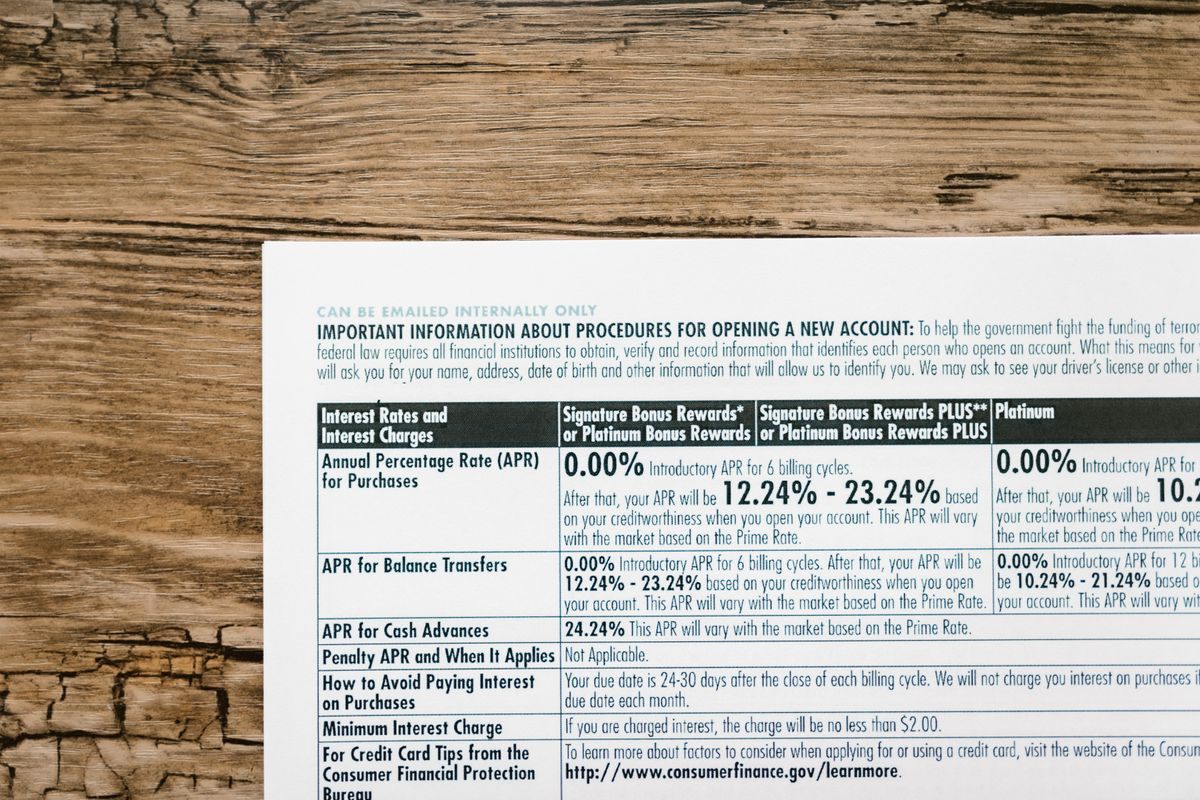
Most cards have more than one APR: purchases, balance transfers, cash advances and sometimes a penalty APR after a late payment. Each balance accrues interest at its own rate.
Cash advances are usually the most expensive. Take an illustrative $500 cash advance at a 29.99% APR, repaid after 25 days. The interest is $500 × (0.2999 ÷ 365) × 25 = $10.27, and on top of that most cards charge a cash advance fee, often a percentage of the amount. At an illustrative 5%, that is another $25.00.
In the US, the CARD Act requires that any amount you pay above the minimum goes to the balance with the highest APR first, which helps when you are paying off a mix of balances.
How to pay less credit card interest
- Pay the full statement balance whenever you can, to keep the grace period.
- Pay as early in the cycle as possible, or split your payment in two, to shrink the average daily balance.
- Avoid cash advances, which skip the grace period and usually carry a higher APR plus a fee.
- Ask for a lower APR. If you have paid on time, ask the issuer whether it can reduce your rate.
- Make a payoff plan. Use the credit card payoff calculator to see how long your balance will take to clear at different payments. If you have several cards, the debt payoff calculator compares paying off the highest rate or smallest balance first.
Frequently asked questions
Does paying the minimum stop interest from being charged?
No. The minimum keeps your account in good standing, but interest is still charged on everything you have not paid. See why minimum payments keep you in debt for what that looks like over time.
Is credit card interest charged on interest?
On most cards, yes. When interest compounds daily or is added to the balance each month, next month's interest is calculated on a balance that includes it.
Why does my interest change from month to month at the same APR?
Billing cycles have different numbers of days, and your daily balances change with every purchase and payment. A 31-day cycle costs more than a 28-day cycle on the same balance.
Is APR the same as the interest rate on a credit card?
In practice, yes. A card's APR does not include annual fees, so it is effectively the interest rate. Our guide to APR vs interest rate covers the difference for loans, where fees do count.
Next steps
- Find your purchase APR, cash advance APR and grace period terms in your cardholder agreement or online account.
- Divide your APR by 365 and multiply by your balance to see your daily cost.
- If you carry a balance, follow a plan to pay off credit card debt fast, and test payment amounts in the credit card payoff calculator.
This article is for general education and is not financial advice. Rules, rates and products vary by lender and country. See our disclaimer.